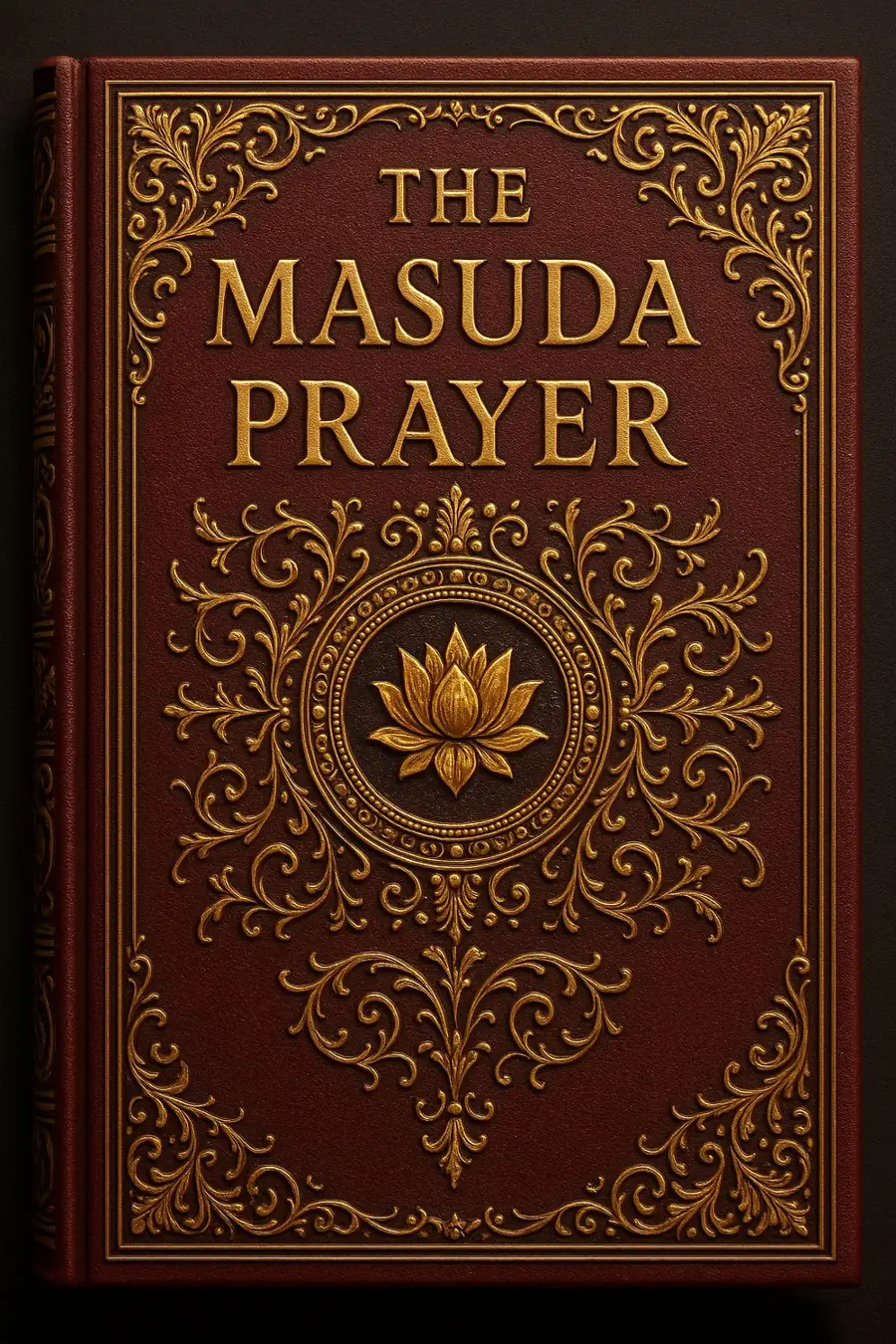
There is a concept in Japanese culture called kansha — gratitude — that is more profound than the English word suggests. Where English gratitude is an emotion felt in response to receiving something, kansha is understood as an orientation of consciousness — a way of perceiving existence that recognises the extraordinary gift of being alive as the foundation from which all other abundance flows. The Masuda Prayer is a specific practice for cultivating kansha at the level of consciousness rather than as a performed emotional response.
What Distinguishes the Masuda Prayer Approach
Most gratitude practices ask you to list things you are grateful for. This is surface gratitude — gratitude directed at specific objects or circumstances — and it is useful but limited. The Masuda Prayer works at a different level: it cultivates gratitude for existence itself, for consciousness, for the capacity to perceive and experience, before it directs that gratitude toward any specific content. This sequence — ground in being before moving to having — produces a quality of gratitude that standard gratitude journaling cannot approach.
Research into gratitude and the brain has identified a consistent finding: gratitude activates the hypothalamus, which governs stress regulation, and the ventral tegmental area, which governs dopamine release. But researchers have found that the depth of gratitude matters more than the frequency. Surface gratitude — listing items — produces modest activation. Gratitude felt at depth — accompanied by genuine emotional presence and physiological resonance — produces substantially stronger neurological effects, including measurable reductions in cortisol and increases in the neurotransmitters associated with well-being, generosity, and the felt sense of abundance.

The Three-Stage Practice
The Masuda Prayer programme teaches a three-stage daily practice of approximately 15 minutes. Stage one cultivates gratitude for existence itself — the simple fact of consciousness, of breath, of the capacity to experience. Stage two extends this gratitude to the specific blessings already present in life, felt as deeply as possible rather than listed efficiently. Stage three opens the consciousness into what the programme calls the abundance field — the state from which new abundance naturally flows because the practitioner is already, internally, abundant.
The sequence is crucial. Most manifestation practitioners attempt to access the abundance field directly, from a consciousness still oriented around lack. The Masuda Prayer builds the bridge: existence gratitude creates the felt sense of fundamental sufficiency, which creates the internal state from which more can genuinely be received.
After the three-stage Masuda Prayer practice, spend five minutes writing from the abundance field state rather than from lack. The difference in what emerges is immediate and striking. Most people discover that the scripting, visualisation, or affirmation work they do after the Masuda Prayer has a quality of genuine fullness — rather than reaching from emptiness — that produces significantly better subconscious installation.
“I have practised standard gratitude journaling for four years. The Masuda Prayer produced a depth of gratitude in the first week that four years of listing had never achieved. The distinction between listing gratitude and feeling it at the level of existence is real and the difference in how everything downstream from that feeling works is complete.”
“The abundance field state described in stage three is the most profound manifestation state I have ever accessed. I can reproduce it consistently through the three-stage practice. Before the Masuda Prayer, I accessed it occasionally by accident. Now I access it every morning by design.”
“Quiet and profound rather than dramatic. The shift it produces in my consciousness is subtle at first and then, suddenly, everything looks different. My relationship to abundance changed from grasping to receiving. That shift has changed my results across every area of my life.”
“I combined the Masuda Prayer with my 369 scripting and the quality of what I write has changed so dramatically that I read my old journals with something approaching embarrassment. The depth of conviction behind my written intentions is categorically different when it comes from a state of genuine gratitude rather than aspiration.”
Final Verdict: The Masuda Prayer is the most profound gratitude-based manifestation practice I have reviewed — not because gratitude is a novel idea but because the sequence and depth of this specific practice produces genuine abundance consciousness rather than performed thankfulness. For serious practitioners ready to go to the root: this is foundational work. Rating: 4.2 / 5.
- Rooted in a genuine Japanese spiritual tradition
- Gratitude cultivated at neurological depth, not surface performance
- Measurable shift in abundance consciousness from week 2
- Works synergistically with any existing manifestation practice
- Profound simplicity — the practice is short but the depth is real
- Requires genuine emotional engagement, not rote repetition
- Cultural framework may require openness to receive fully
- Results build gradually — not a rapid-transformation tool